
HerStory Untold: When Miki’s period ceased at 43, she realised she was in perimenopause and chose to speak up
- Team Surety

- 1 day ago
- 6 min read
From regular to missing, Miki Kong’s body sent a signal she did not understand.From unaware to facing the unknown, she entered perimenopause at 43. From silence to speaking out, she now challenges the taboo around perimenopause.
Her story begins with a gap on the calendar.

Miki had always been regular, so when her period did not come, pregnancy was not her first thought. She was worried something was wrong with her body. The first missed week became a second, then a third, and soon the wait stretched from three weeks into months. She remembers questioning whether her womb was healthy and whether something serious was happening. That moment marked the beginning of fear, uncertainty, and a journey she never expected.
It is also a moment many women recognise, even if they do not have words for it yet. Changes to periods are often one of the earliest signs of perimenopause, the transition phase before menopause.
When Miki went for a blood test, the results brought a new kind of shock. She was told her oestrogen and progesterone levels were very low. The numbers were clear, but she did not understand what they meant, or how they connected to what she was feeling. “I felt completely lost,” she says, because nobody slowed down to explain what her body was doing, and what her choices could be.
The search for answers, and what it revealed
The first turning point came in a consultation that left her with more questions than comfort. Her gynaecologist suggested hormone replacement therapy, but the condition and the options were not explained in detail. She left feeling unheard and unsupported. Being told she might need to take medication continuously for years felt overwhelming without context. Miki felt that what she needed was a calm conversation, one that laid out the pros and cons, and made room for questions and personal comfort levels.
Instead, she did what many people do when they leave a clinic still confused. She searched for answers online.
That became her second turning point, because the internet did not give her clarity. Instead, it gave her noise and the conflicting information made her anxiety worse. She was trying to make sense of her symptoms, but every new tab seemed to open another possibility to fear. Looking back, she realises that information is only helpful when it is trusted, explained well, and matched to your own situation. It is why she now believes perimenopause should be treated as a conversation, not just a prescription.
When the body forced a pause
Her body made it impossible to ignore. Miki developed frozen shoulder, and the physical limitation became a loud signal that something was changing beyond her cycle. Around the same time, brain fog entered her daily life. It did not show up as a dramatic collapse. It showed up as small failures that kept repeating. She could no longer rely on memory alone. She had to write things down just to move from one task to the next. Brain fog and problems with memory or concentration are recognised symptoms of menopause and perimenopause, and they can affect work, relationships, and day to day routines.
So, she changed her pace.
Miki stopped multitasking the way she used to. She started planning her days more intentionally. She relied on notes and reminders, and she gave herself more grace instead of pushing through exhaustion. It was not a dramatic reinvention. It was a practical shift, the kind that quietly keeps a person afloat. In her own way, it was also the start of her rebuilding confidence, because she stopped measuring herself by an old baseline.
Speaking up, and finding people who understood
Her support seeking journey did not begin confidently either. She began with self research, but it made her more confused. In a moment of hesitation and desperation, she shared her experience on LinkedIn, even though it felt uncomfortable to talk about something so personal on a platform where this topic is rarely discussed. She was not trying to start a movement that day. She was hoping someone would understand and point her in the right direction.
What surprised her most was the kindness that came back.
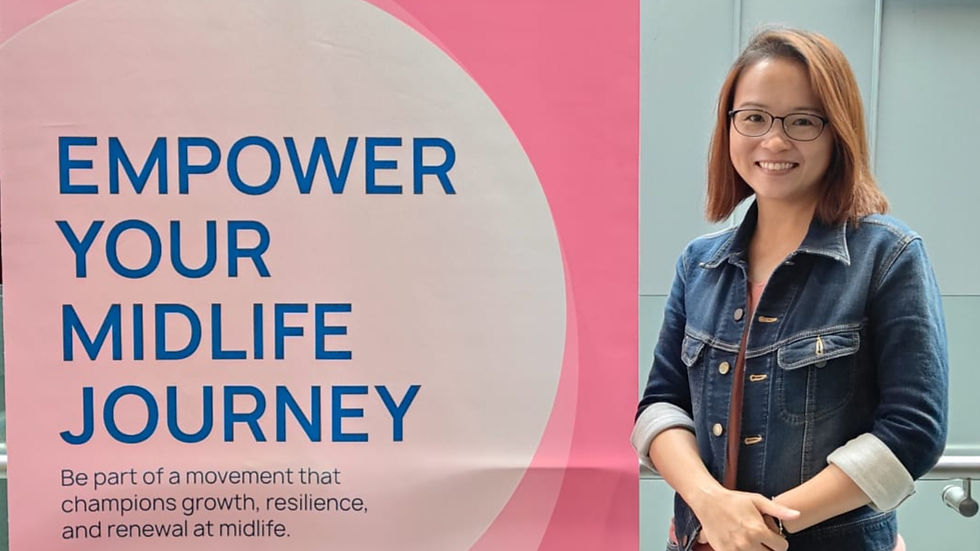
People did not brush it off as “normal” in a way that dismissed her. They offered perspective, and in some cases, they shared their own stories. Through Surety, Miki found a community where she felt safe asking questions, sharing openly, and learning from women who had already walked this path. For the first time, she did not feel alone.
It also changed how she carried the topic into work.
What she wants to change for other women
Miki works remotely most of the time, so there was no single defining workplace moment of support or lack of it. In many ways, she had to take charge of her own self care, which became both a challenge and a blessing. She learned to manage her energy, her schedule, and her boundaries. She also became more open about her perimenopause journey, even sharing it with male colleagues and friends. Surprisingly, she found that they were often more embarrassed than she was.
But Miki did not see openness as weakness. She experienced it as freedom.
Being honest helped her release the fear of judgement. It strengthened her confidence differently, because she realised life and work do go on, even without a period. She also realised honesty can create understanding rather than discomfort, if the environment allows it. If there is one thing she wants managers, colleagues, and HR teams to understand, it is that flexibility and empathy during this phase are not special treatment. They are what allow people to continue performing sustainably.
The shift did not stop at work.
Midlife changes also affected closeness and connection in her relationships. Miki realised that educating others includes helping her spouse understand what she was going through, because every woman experiences this differently. Without those conversations, small things can become misunderstandings. She learned to speak up about how she was feeling, what she needed, and when she needed space or rest. That openness made relationships feel more supportive, not strained. It also clarified something important for her: support is not only what you receive, it is also what you learn to ask for.
Today, support looks like courage and community.
It starts with having the courage to ask for help. It continues with finding people, or a community, who are willing to share honestly and listen without judgement. The ones who showed up for her were those who made her feel safe, told her “you’re not alone,” and shared their own journeys so she did not feel lost or ashamed.
Miki also has a clear message about the pressures women face in midlife. She has responded by valuing her health, energy, and clarity over chasing how she is “supposed” to look. Mood changes can happen, but they do not define a woman or cancel out her professionalism.
“One myth that needs to go is the idea that women in midlife are ‘just moody’ because of menopause,” Miki says. Yes, mood changes can happen, but they do not define a woman or cancel out professionalism. Perimenopause is a health transition, not a personality flaw.
Menopause and perimenopause can affect mood and mental wellbeing, and those changes deserve understanding, not labels or jokes.
When she looks at the bigger picture in Asia, she sees two levers that could change everything.
The first is trusted public education. She believes stronger support from governments and health authorities would bring awareness out into the open, and help remove fear, shame, and misinformation. The second is workplace advocacy. When leaders, HR teams, and colleagues can talk about it without awkwardness, it signals this is a normal life stage, not something women need to hide.

For younger colleagues, Miki’s advice is simple and respectful. Be kind, be open, and do not make it a joke. Listen without trying to fix. Give space when he or she needs it. Understand that support can be practical, not personal.
If Miki could speak to her younger self at the start of this transition, she would say:
“Prepare yourself early. When the change comes, you’ll meet it with clarity, not panic.”
That is also what she hopes readers remember.
Get prepared early. Perimenopause is not something to fear, but something to understand before it arrives. Awareness gives you choice, confidence, and the ability to face change without feeling lost.
HerStory Untold is a series that brings forward the stories women often carry quietly through midlife, menopause, work, and personal change. By sharing lived experiences with honesty and care, it hopes to help more women feel seen, heard, and less alone.

Join her and Surety in redefining the menopause experience: One story, one lesson, one empowered woman at a time. It is where every voice is heard, every story matters, and together, we are rewriting the narrative of perimenopause, menopause and midlife!
Want to share your story? Write to us at contact@suretysg.com.
Join the Our Community

Disclaimers: This article shares an individual’s journey and is not universal advice or experience. Content is for informational purposes only. Consult a healthcare professional for medical advice. We aim for accuracy but cannot guarantee it. Reliance on any information here is at your own risk. External links are not endorsed by us. This is not sponsored. Reader discretion is advised for topics on health and wellness.

